
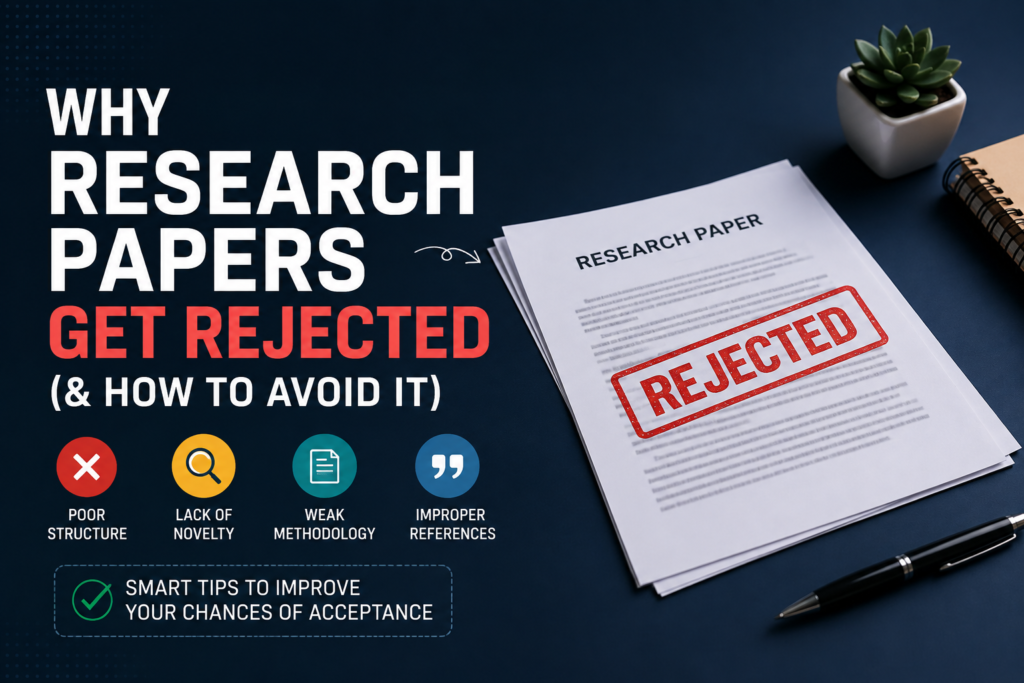
Common Reasons Why Research Papers Get Rejected (And How to Avoid Them)
By ijrretas
Getting a rejection email from a journal can feel discouraging, especially after months of research and writing. But here's the truth: rejection is an extremely common part of academic publishing, and it rarely means your research lacks value.Even well-known researchers face rejection multiple times before their work gets accepted. In fact, top-tier journals reject a large percentage of submissions, not necessarily because the research is weak, but because of avoidable issues in methodology, presentation, or journal selection.
Understanding why research papers get rejected is the first step toward improving your submission strategy. Many rejections happen due to fixable problems like poor formatting, weak literature reviews, unclear objectives, or choosing the wrong journal for your study.The good news? Most rejection reasons are preventable once you know what reviewers and editors are looking for.
Whether you're a PhD scholar submitting your first paper or a professor guiding students through publication, this guide will help you approach the process with more confidence and clarity.
Academic journals operate under strict quality and relevance standards. Every submission goes through layers of evaluation before it's accepted.
Acceptance rates vary widely. Some reputed journals accept less than 20% of submissions, while niche or newer journals may have higher acceptance rates. Low acceptance rates don't always reflect research quality — they often reflect how competitive and specific the journal's scope is.
Editorial screening happens first. An editor checks whether the paper fits the journal's aim and scope, meets basic formatting requirements, and shows enough originality to proceed further.
Peer review follows if the paper passes editorial screening. Independent experts evaluate the methodology, findings, and contribution to the field.
For example, a paper submitted to a clinical journal but focused on unrelated theoretical mathematics would likely face desk rejection due to poor journal-topic fit, regardless of research quality.
A desk rejection happens when the editor rejects a paper without sending it for peer review.
Conclusion
Rejection is a normal, and often necessary, part of the academic publishing journey. Rather than viewing it as a setback, treat it as valuable feedback that helps refine your research and writing.
By understanding why research papers get rejected and addressing common issues, like weak methodology, poor journal selection, or citation errors, you significantly improve your chances of acceptance.
Focus on choosing the right journal, following submission guidelines closely, and presenting your research with clarity and honesty.
With these habits in place, you'll be well-positioned to publish your research paper successfully.
Once your manuscript is ready, consider exploring journals that align with your research area for your next submission. (Insert your journal's submission link
here, e.g., "Submit your paper to [Your Journal Name] at [your-journal-link].")