
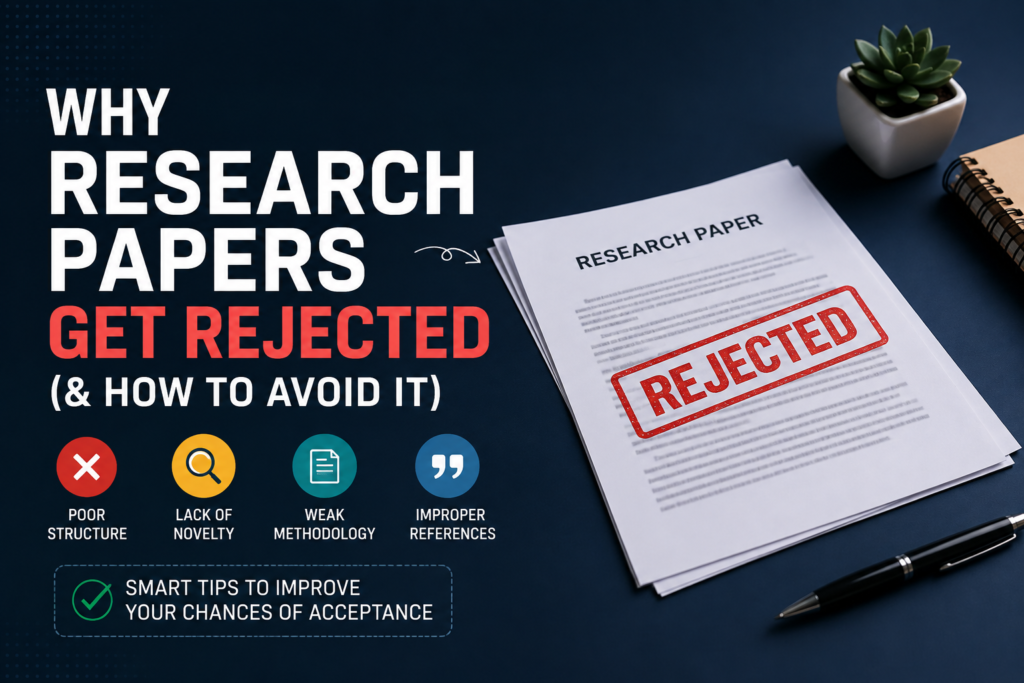
Why Research Papers Get Rejected (& How to Avoid It)

why research papers get rejected

Table of Contents

Common Reasons Why Research Papers Get Rejected (And How to Avoid Them)

By ijrretas
Getting a rejection email from a journal can feel discouraging, especially after months of research and writing. But here's the truth: rejection is an extremely common part of academic publishing, and it rarely means your research lacks value.Even well-known researchers face rejection multiple times before their work gets accepted. In fact, top-tier journals reject a large percentage of submissions, not necessarily because the research is weak, but because of avoidable issues in methodology, presentation, or journal selection.
Understanding why research papers get rejected is the first step toward improving your submission strategy. Many rejections happen due to fixable problems like poor formatting, weak literature reviews, unclear objectives, or choosing the wrong journal for your study.The good news? Most rejection reasons are preventable once you know what reviewers and editors are looking for.

In this comprehensive guide, you'll learn:

  • The real reasons journals reject papers
  • The difference between desk rejection and peer-review rejection
  • The top mistakes authors make (and how to fix them)
  • A practical submission checklist
  • Common myths about rejection
  • Actionable tips to strengthen your next submission

Whether you're a PhD scholar submitting your first paper or a professor guiding students through publication, this guide will help you approach the process with more confidence and clarity.

Why Do Journals Reject Research Papers?

Academic journals operate under strict quality and relevance standards. Every submission goes through layers of evaluation before it's accepted.
Acceptance rates vary widely. Some reputed journals accept less than 20% of submissions, while niche or newer journals may have higher acceptance rates. Low acceptance rates don't always reflect research quality — they often reflect how competitive and specific the journal's scope is.
Editorial screening happens first. An editor checks whether the paper fits the journal's aim and scope, meets basic formatting requirements, and shows enough originality to proceed further.
Peer review follows if the paper passes editorial screening. Independent experts evaluate the methodology, findings, and contribution to the field.

There are two broad rejection types:

Desk rejection

Rejected by the editor before reaching reviewers.

Peer-review rejection

Rejected after expert evaluation.

For example, a paper submitted to a clinical journal but focused on unrelated theoretical mathematics would likely face desk rejection due to poor journal-topic fit, regardless of research quality.

Top 5 Reasons Research Papers Get Rejected

1. Poor Research Methodology

A weak or unclear methodology is one of the most common mistakes in research papers.

Why it causes rejection: Reviewers need to trust that your results are valid and reproducible. If your sample size, data collection process, or analysis method isn't clearly justified, the paper's credibility suffers.

Example: A study claiming significant findings from a sample size of only 10 participants, without addressing this limitation, is likely to raise reviewer concerns.

How to avoid it:

  • Clearly justify your research design
  • Explain data collection and sampling methods
  • Address limitations honestly

2. Weak Literature Review

A literature review that misses key studies or fails to show a clear research gap often leads to rejection.

Why it causes rejection: It signals that the author hasn't fully engaged with existing research, making it hard to judge the study's originality.

How to avoid it:

  • Cite recent, relevant studies
  • Clearly show the gap your research fills
  • Avoid over-relying on outdated sources

3. Lack of Originality or Plagiarism

Lack of originality and plagiarism are among the fastest ways to get a journal paper rejection.

Why it causes rejection: Journals use plagiarism detection software. Even unintentional overlap with existing work, including AI-generated content that closely mirrors published material, can trigger rejection or ethical review.

How to avoid it:

  • Run a plagiarism check before submission
  • Paraphrase and cite properly
  • If using AI tools for drafting, disclose it if required and always fact-check and rewrite in your own voice

4. Improper Citations and Formatting Mistakes

Incorrect citation styles, inconsistent formatting, or missing references frustrate reviewers and editors.

Why it causes rejection: It reflects a lack of attention to detail and can make claims appear unsupported.

How to avoid it:

  • Follow the journal's official author guidelines precisely
  • Use reference management tools (Mendeley, Zotero, EndNote)
  • Double-check citation consistency throughout the paper

5. Weak Abstract and Unsupported Conclusions

Your abstract is often the first (and sometimes only) section reviewers read before deciding to proceed.

Why it causes rejection: A vague abstract or conclusions not backed by your data creates doubt about the paper's overall quality.

How to avoid it:

  • Write a clear, concise abstract summarizing objective, method, and findings
  • Ensure your conclusions are directly supported by your results
  • Avoid overstating your findings

Other common issues include:

  • Grammar and language errors
  • Poor statistical analysis
  • Inappropriate journal selection
  • Ethical violations (consent, data fabrication, authorship disputes)
  • Low-quality figures and tables
  • Ignoring reviewer or formatting guidelines

Expert Tip: Before submitting, read your paper as if you're a reviewer seeing it for the first time. Ask: "Does this clearly show why the research matters and how it was conducted?"

What Is a Desk Rejection?

A desk rejection happens when the editor rejects a paper without sending it for peer review.

Why it happens:

  • Poor fit with the journal's scope
  • Weak or unclear writing
  • Missing key sections (methodology, ethics statement, etc.)
  • Formatting or submission guideline violations

How to avoid it:

  • Research the journal's aim and scope before submitting
  • Follow the submission checklist precisely
  • Have a colleague or mentor review your paper first

Common Mistake: Submitting the same paper to multiple journals without tailoring it to each one's specific requirements.

How to Improve Your Chances of Acceptance

Here are actionable research paper acceptance tips to strengthen your next submission:

  1. Select the right journal – Match your paper's scope, audience, and format to the journal.
  2. Follow author guidelines exactly – Formatting, word count, and citation style all matter.
  3. Run a plagiarism check – Use trusted plagiarism detection tools such as Turnitin or iThenticate before submission.
  4. Get professional proofreading – Language errors weaken credibility.
  5. Strengthen your discussion section – Connect findings back to your research question.
  6. Ensure ethical compliance – Consent forms, data privacy, and proper authorship credit.

Pro Tip: Before submitting your manuscript, search Google Scholar to review recent studies, identify relevant references, and ensure your literature review is up to date.

Common Myths About Research Paper Rejection

Myth 1: "Only bad papers get rejected."

Reality: Many high-quality papers get rejected due to poor journal fit, formatting issues, or scope mismatch—not because of poor research quality.

Myth 2: "Prestigious journals always reject first-time authors."

Reality: Journals evaluate the quality of the research, not the author's publication history. A well-prepared first-time submission has a fair chance of acceptance.

Myth 3: "Grammar alone causes rejection."

Reality: While language issues can reduce readability, rejection is usually based on multiple factors, including methodology, originality, and journal fit—not grammar alone.

Conclusion

Rejection is a normal, and often necessary, part of the academic publishing journey. Rather than viewing it as a setback, treat it as valuable feedback that helps refine your research and writing.
By understanding why research papers get rejected and addressing common issues, like weak methodology, poor journal selection, or citation errors, you significantly improve your chances of acceptance.
Focus on choosing the right journal, following submission guidelines closely, and presenting your research with clarity and honesty.
With these habits in place, you'll be well-positioned to publish your research paper successfully.
Once your manuscript is ready, consider exploring journals that align with your research area for your next submission. (Insert your journal's submission link
here, e.g., "Submit your paper to [Your Journal Name] at [your-journal-link].")

Leave a Reply